
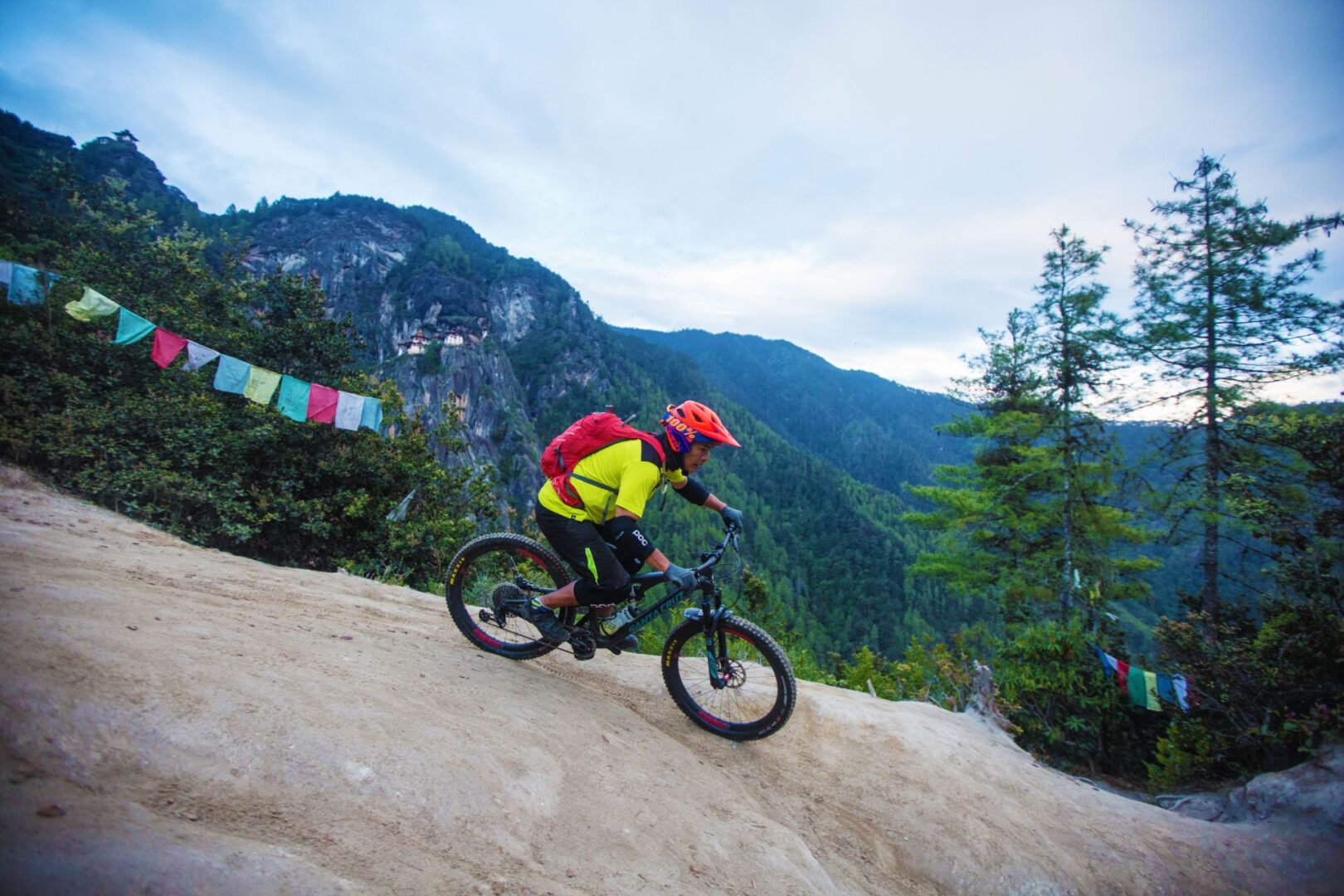
Bhutan asks a little more planning than most riding destinations — and repays every minute of it. This page covers what riders ask us before they book flights. Read it once, pack right, and let us handle the rest.
Getting to Bhutan
Entry by Air
Two national carriers — Drukair and Bhutan Airlines — fly into Paro several times a week from Bangkok, Delhi, Kolkata, Kathmandu, Singapore, Dhaka, Guwahati and Bodh Gaya. Ask for a left-side window seat: on a clear day you pass Everest, Lhotse, Makalu and Kangchenjunga before the aircraft banks into the Paro valley.
Paro airport sits at 7,300 ft, ringed by 4,000 m ridgelines, so every landing is a visual one — one of the most spectacular approaches in world aviation. Your guide will be waiting at arrivals with the support vehicle.
A domestic flight links Paro with Bumthang three times a week. Rides that finish deep in central Bhutan can use it to skip a full day of driving back west.
Entry by Road
Three land borders are open to international visitors: Phuentsholing, Gelephu and Samdrup Jongkhar. Phuentsholing lies about 170 km from Bagdogra airport in India, and the 176 km climb from the border to Thimphu takes around six hours of glorious hairpins. All overland entries and exits require an Indian visa — we prepare the paperwork so the crossing is painless.
Best Time to Ride
Bhutan stretches from subtropical jungle to glaciated 7,000 m peaks, so there is riding somewhere in every month. For most riders the sweet spots are spring (March–May) and autumn (September–November) — which is exactly when our fixed departures run.
MTB Seasons
Spring brings mild temperatures and rhododendron forests in full bloom above 3,000 m — big-mountain lines open as the snow retreats. Autumn is prime time: October has the clearest peaks, the lowest rainfall and fast, dusty trails. High-expedition riding above 4,000 m sits at the shoulders of these windows — before the May rain arrives and after the monsoon clears.
Moto Seasons
The passes ride best in spring and autumn. Winter (December–February) still makes a superb road tour in western Bhutan — sunny, dry days in the valleys, though nights can touch −5 °C and the highest passes may close after snowfall. Summer brings the monsoon: short bursts of daily rain, and everything impossibly green. We plan routes around it.
September and October also carry the biggest tshechus — Bhutan’s masked monastic festivals. Worth building into any itinerary.
Sustainable Development Fund & Visa Policy
Bhutan manages tourism on a “high value, low volume” policy. Every visitor pays a government-set Sustainable Development Fund plus a one-time visa fee — it is what keeps the trails empty and the culture intact.
- Sustainable Development Fund — US$100 per person per night, payable to the Royal Government of Bhutan
- Visa fee — US$40, one time
- Monument fees — US$100–300 in total, depending on how many dzongs and temples your route visits
- Indian nationals — SDF of INR 1,200 per person per day
All of these government fees are built into our tour pricing and we make the payments for you — you will never queue at a counter. Solo travellers and groups of fewer than three pay a small surcharge over the minimum daily rates.
Getting Around & Support Vehicles
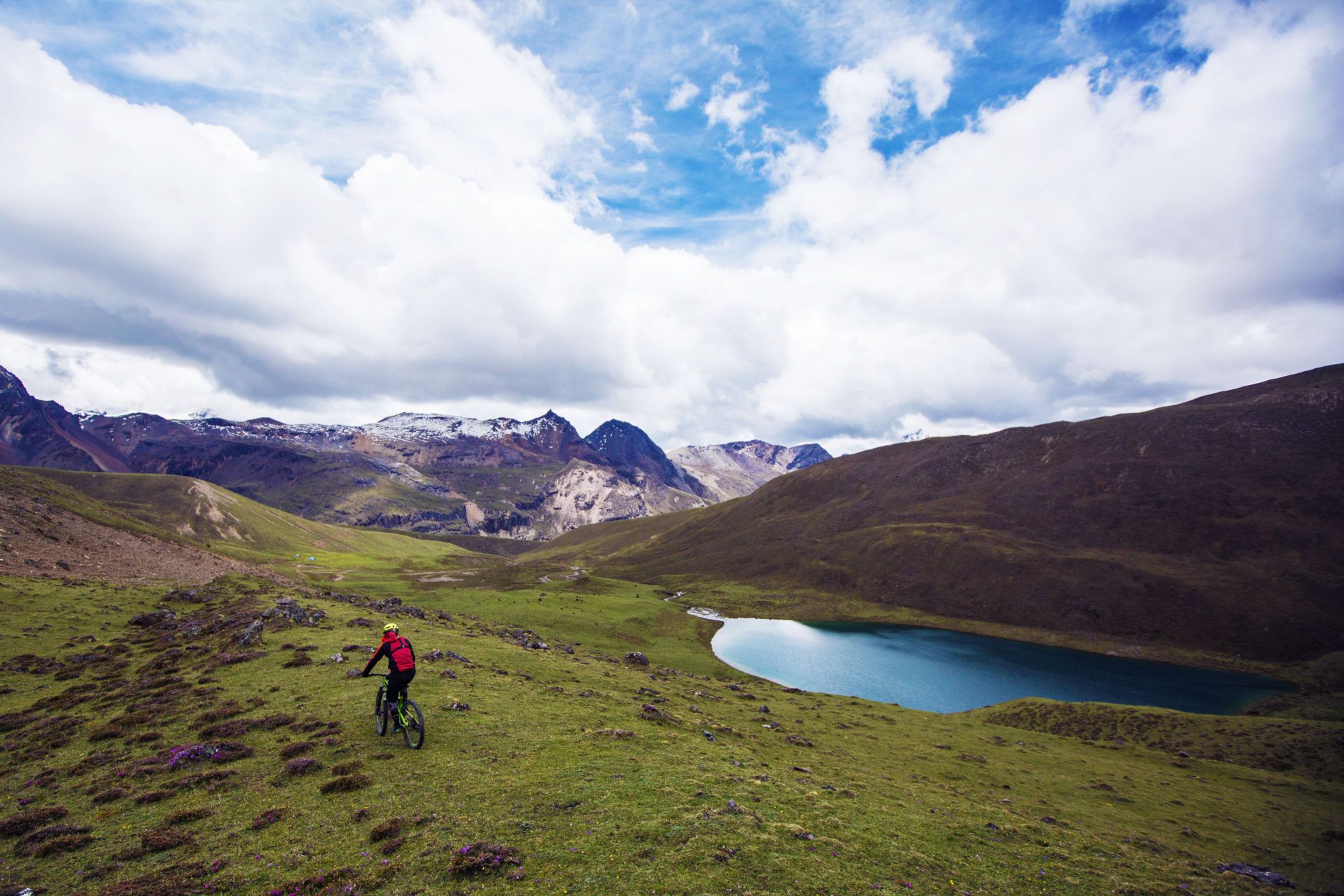
All twenty districts of Bhutan are connected by road — just don’t expect much of it straight or flat. Some stretches pack six or seven bends into a single kilometre, and average speeds rarely beat 30 km/h. In a tour bus that’s exhausting. On two wheels, it’s the whole point.
Every Bhutan Rides departure travels with a dedicated support vehicle. Your luggage, spare parts, a full toolkit, first-aid and snacks stay within reach all day — and there is always a seat if you want to sit out a climb, a transfer or a rainy hour. On MTB trips it shuttles you to the trailheads; on moto tours it sweeps behind the group.
We run late-model Toyota support vehicles and retire them before their fourth year — maximum safety, minimum emissions — with drivers licensed by the Road Safety and Transport Authority.
Typical Transfer Times
| Route | Distance | Time |
|---|---|---|
| Thimphu – Paro | 65 km | 1 h 30 min |
| Thimphu – Punakha | 77 km | 2 h 15 min |
| Thimphu – Haa | 115 km | 3 h 30 min |
| Wangdue Phodrang – Trongsa | 129 km | 4 h |
| Trongsa – Bumthang | 68 km | 2 h 30 min |
| Thimphu – Phuentsholing | 176 km | 6 h |
Slow kilometres, spectacular kilometres — every transfer runs past dzongs, gorges and prayer-flag passes.
Travel Insurance & Safety
Travel medical insurance is mandatory on every trip, and trip-cancellation cover is strongly recommended. Weather can reshuffle the only flights in and out of Paro, and mountain plans occasionally change — insurance has saved our guests real money more than once.
Riders, check the fine print: your policy must explicitly cover mountain-biking or motorcycling, and its altitude ceiling must clear the highest point of your ride — up to 4,600 m on our expedition itineraries. Standard holiday policies often exclude both; the adventure-sports add-on is usually cheap.
Our own rule is simpler: no helmet, no ride — ever. Quality lids are waiting in the garage if you don’t bring your own.
Bhutan is one of the safest countries you will ever travel in, and crime is rare. Still, look after your valuables: report any loss to the nearest police station and we will help with the paperwork.
Health & Altitude
No vaccinations are currently required for Bhutan. Malaria risk exists only in the tropical south — nowhere near our riding routes — so prophylaxis isn’t needed unless you extend down there. Talk to your physician before departure for personal advice.
Altitude is the thing to respect. Ride valleys sit between roughly 1,100 m and 2,800 m, moto passes reach 3,988 m at Chele La, and our MTB expedition tops out at 4,600 m. Itineraries climb gradually, and pacing at altitude is built into how we guide.
Help yourself, too: arrive a day early if you can, drink more water than feels necessary, go easy on alcohol the first nights, and tell your guide the moment a headache or nausea shows up. We carry first-aid on every ride and never push a rider who needs to descend.
Visa & Passport
Everyone except nationals of India, Bangladesh and the Maldives needs a visa approved before arrival. There is no visa-on-arrival and no embassy abroad issues it — everything is processed in Thimphu through the Department of Immigration, and we handle it for you once your booking is confirmed.
Send us a clear passport copy well ahead of your trip. Your passport must be valid for at least six months beyond your departure date from Bhutan. We email your visa-clearance letter about 15 days before travel — print it and carry it, because airlines ask for it at check-in. The visa itself is stamped into your passport when you land.
Transiting India? You need an Indian visa before leaving home — it is not issued on arrival. Nepal, by contrast, issues visas at Kathmandu airport.
Flights & Baggage
Both national airlines hold high safety standards, but Paro is a daylight-only, weather-dependent airport and delays happen. Keep at least 24 hours — ideally a full day — between your Paro flight and any onward connection, and pack medicines, toiletries and one change of riding kit in your hand baggage.
- Hand baggage — one piece up to 10 kg, plus a laptop or camera bag
- Checked baggage — 30 kg in economy, 40 kg in business class
- Departure taxes — already included in your ticket
Flying With Your Own Bike or Gear
A boxed bike counts toward your checked allowance, so weigh everything before the airport and pre-arrange sports baggage with the airline. Send us your box dimensions and we will confirm the current excess-baggage rate before you fly. Riding kit is heavy — split helmet, boots and armour between your bags.
Once you’re in Bhutan, your bike box travels in the support truck or waits safely at our Thimphu garage until the ride ends.
If we book your Drukair tickets, e-tickets arrive by email — carry a printed copy. Airports in India in particular ask for it before letting you into the terminal.
Bikes & Gear
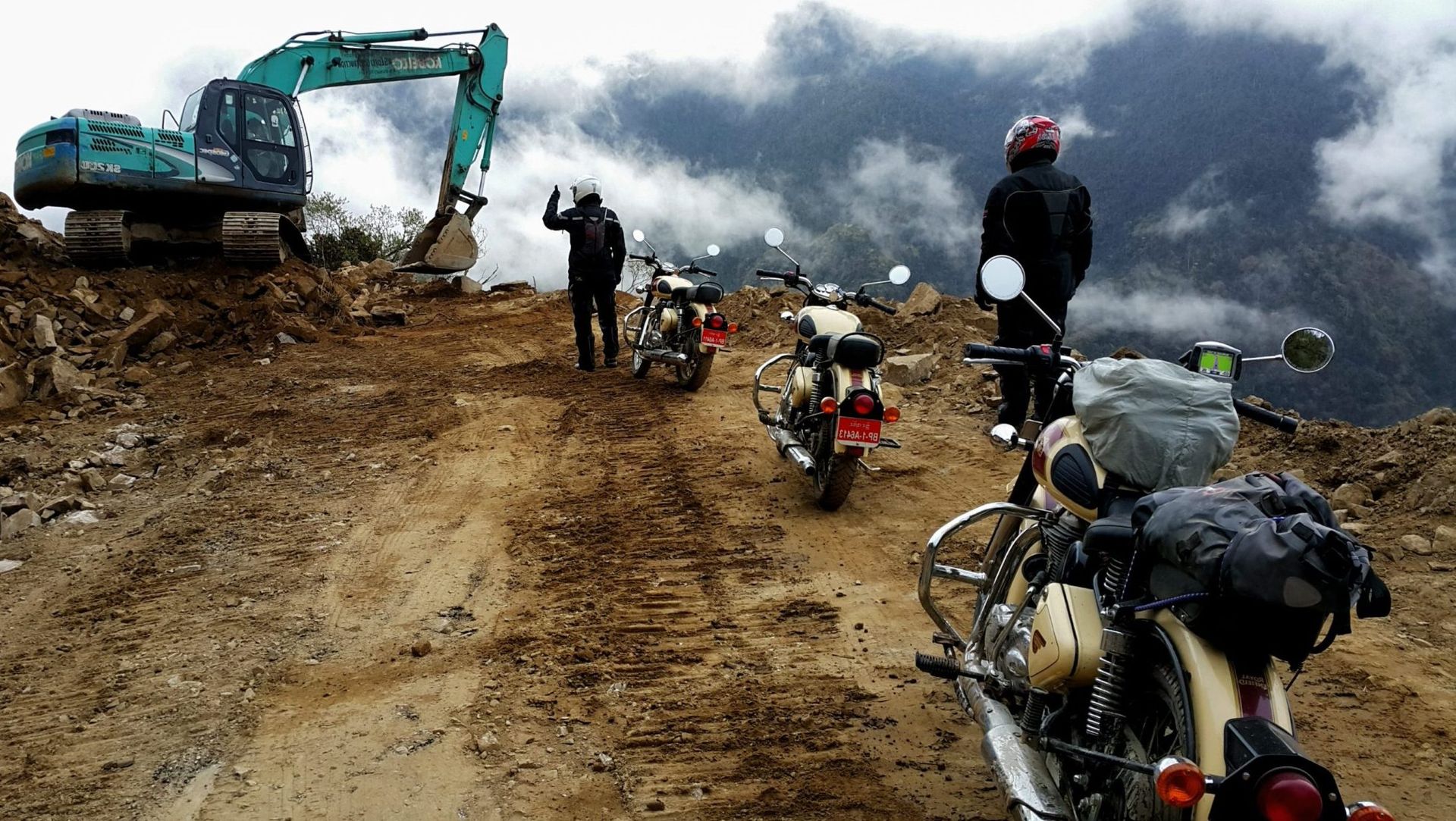
Ride our machines or bring your own — either way the garage has your back. Our fleet runs current-generation enduro and trail bikes, checked nightly by our own mechanics, alongside a stable of Royal Enfield Himalayans set up for Bhutanese roads. Every trip travels with a workshop in the support truck.
What the Garage Provides
A dialled bike or Himalayan sized to you · quality helmet and pads if you need them · tubes, sealant, brake pads and drivetrain spares · nightly mechanical checks and trailside repairs.
What to Bring
Your own helmet if you love its fit · riding shoes — tell us flats or clipless and we’ll match pedals · gloves, chamois and jerseys · hydration pack. Moto riders: bring your armoured jacket, pants, gloves and boots.
Meet the machines on Our Garage.
Riding Licence & Road Rules
For motorcycle tours you must carry a motorcycle licence valid in your home country and an International Driving Permit (IDP). Bring both documents plus a photocopy of each — we re-confirm the current requirements with the Road Safety and Transport Authority before every departure.
Bhutan drives on the left. Traffic is light and speeds are low, but the roads demand full attention: blind hairpins, the odd rockfall, and cows, dogs and the occasional yak that consider the tarmac theirs. Your lead rider sets a relaxed pace and briefs the group every morning; the support truck sweeps behind. Checkpoint stops between districts are routine — your guide handles the permits while you stretch.
No licence, or travelling as a pillion partner? You can enjoy the whole route from the support vehicle.
Banking & Money
Bhutan’s currency is the ngultrum (Nu.). The Bank of Bhutan, Bhutan National Bank, Druk PNB and Tashi Bank have branches in all major towns, with ATMs concentrated in Thimphu, Paro and Phuentsholing.
Some hotels and shops accept cards, usually with a surcharge — Visa works more widely than Mastercard or American Express. Once you ride into the interior, ATMs and connectivity thin out fast: do your banking in Thimphu and carry enough cash for the road. Machines occasionally go down, so never rely on a single card.
Electricity & Charging
Bhutan runs on clean hydropower at 220/240 V, through round two-pin and three-pin outlets. Travellers from the USA and Canada should bring an adapter with surge protection.
Riders carry more electronics than most — action cam, GPS, lights, phone. Bring a generous power bank: town hotels have reliable power, farmhouse stays a little less so.
The support truck carries 12 V and USB charging, so camera batteries and GPS units top up between stages.
Accommodation
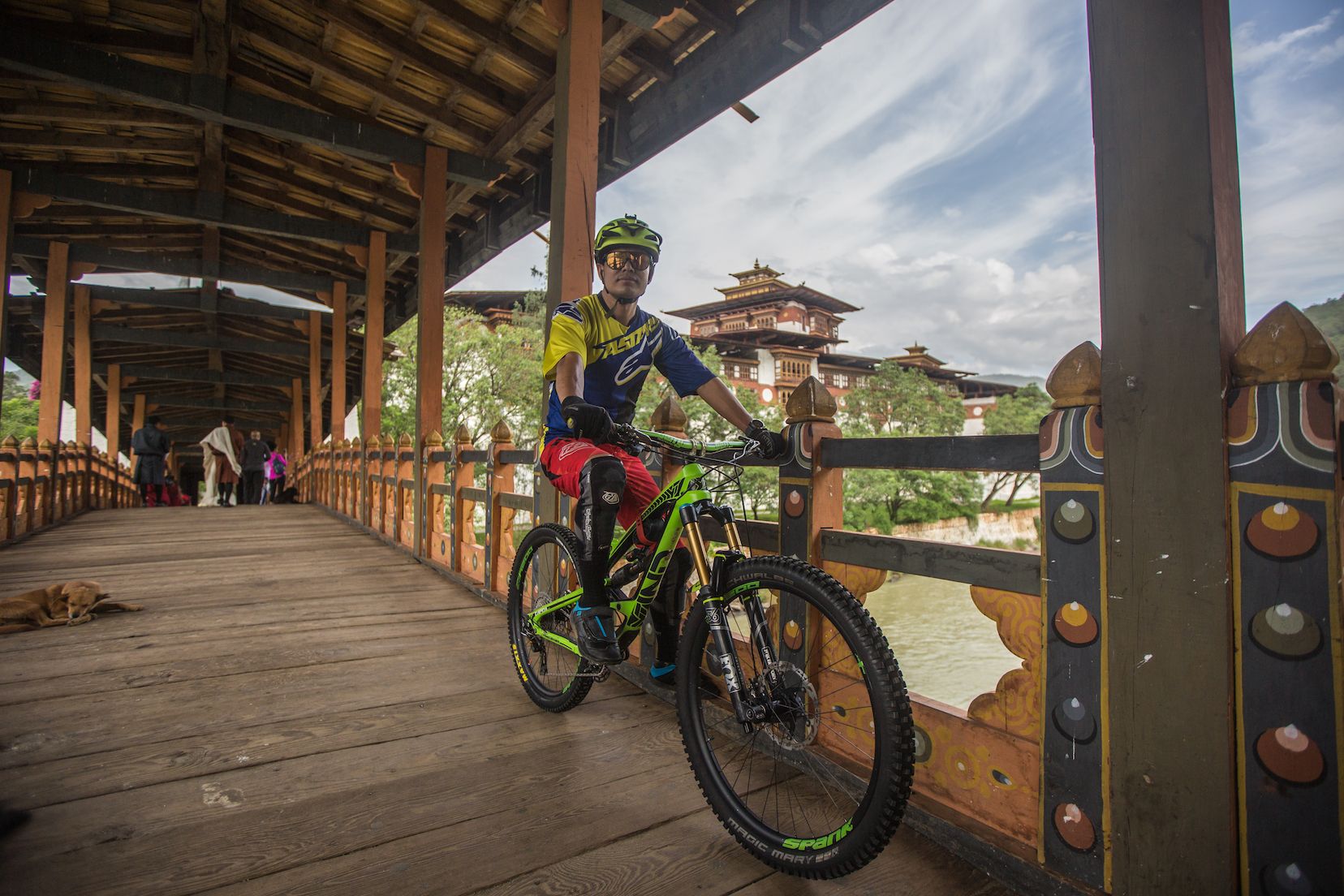
Bhutan grades hotels on its own star system — don’t map it one-to-one onto international stars. Most properties are government-accredited 3-star: comfortable rooms, hot showers and a traditional ambience. Western Bhutan is the best appointed; the centre and east are more modest, which is part of their charm. Four- and five-star luxury exists in certain valleys if you feel like an upgrade night.
Our rides use accredited 3-star hotels and better, with the odd farmhouse night — wood-fired hot-stone bath included — where the riding earns it. Rooms are standard twin or double unless you ask otherwise; tell us any special requests early and we will pass them on, though we can’t always guarantee them.
Food & Beverages
Rice is the staple — try the slightly nutty local red variety — alongside pork, beef, chicken and river fish, plus the national obsession: ema datshi, big green chillies drowned in cheese sauce. Momos (dumplings) and thukpa (noodle soup) fill the Tibetan-style corners of the menu, and butter tea is always offered somewhere.
On tour, most breakfasts and dinners are hotel buffets tempered to western tastes — soup, rice or noodles, vegetables, dal and a protein — so ask your guide when you want the real chilli heat. Long riding days mean picnic lunches at passes and riversides, with ride snacks and tea never far away in the support truck.
Bhutanese kitchens are honest but not endless — the kingdom spent centuries in isolation. If you have allergies or a special diet, tell us before the trip and we will brief every kitchen on the route.
Tipping, Gratuities & Alms-giving
Tipping isn’t obligatory in Bhutan, but it is an accepted practice and genuinely appreciated. If your guides, drivers and mechanics made the trip, tip whatever feels right at the end — the amount matters far less than the gesture.
Around markets and temples you may meet mendicants and holy men; offering a small coin in exchange for an intoned prayer is a respected tradition. Please don’t hand money to children — it encourages begging. And if you’d like to support a school or a village you rode through, talk to us first and we will set it up properly.
Cultural Sensitivities
Dzongs and temples have a dress code: shoulders and legs covered, hat off, shoes off at the shrine door — warm socks recommended, the flagstones are cold. Swap riding shorts for trousers before we walk in; your guide will always warn you in advance.
Inside religious grounds keep voices low, skip cigarettes and alcohol, and never point at people, statues or paintings with a forefinger — use an open, upturned palm. Walk clockwise around monasteries, chortens and prayer wheels. Small donations at altars are welcome; carry small notes.
Photography is fine in courtyards and festival grounds but not inside the chapels — and during a tshechu, never step into the dance arena chasing the perfect shot. When in doubt, ask your guide first.
Rider’s Packing Check-list
Rule number one: don’t bring a lot, and keep it simple. The support truck carries your duffel; you carry the day’s essentials. Build around layers — a riding day can start frosty on a pass and end warm in a valley.
Protection & Ride Kit
- Your own helmet, if you prefer its fit — we provide quality lids
- Riding gloves, plus a spare pair
- MTB: knee pads or body armour · Moto: armoured jacket, pants, boots
- Riding glasses or goggles
- Hydration pack or bottles
- Chamois, padded shorts and jerseys
- Earplugs for the moto miles
Layers & Weather
- Rainproof jacket with hood — non-negotiable
- Quick-dry base layers and a light wool sweater
- Warm hat or buff, plus a sun cap
- Down or fleece layer for pass-top stops
- Trousers and modest wear for dzong visits
- Comfortable walking shoes for evenings
- Swimwear for hot-stone baths and hot springs
Health & Sun
- SPF 50+ sunscreen, after-sun and lip balm
- Personal medication and a small first-aid kit
- Rehydration sachets and anti-diarrhoeal
- Insect repellent and sting relief
- Motion-sickness tablets for the hairpin transfers
- Blister care
Odds & Ends
- Power bank, headlamp and spare batteries
- Camera, spare cards and batteries
- Passport copies and printed visa clearance
- Favourite trail snacks
- Dry bags for wet days, small padlock
- Sunglasses
Cancellation & Refund
Life happens. Here is the short version of what a cancellation costs, counted from your trip start date.
- 60 days or more — 100% refund of tour payment and airfare
- 45–59 days — 75% refundable
- 30–44 days — 50% refundable
- 15–29 days — 25% refundable
- Under 15 days — no refund of tour costs or airfare
All refunds carry a US$100 per-person administrative fee, and refundable amounts can instead be held as credit toward a postponed trip. The full legal wording lives in our Terms & Conditions.
Still got questions? The FAQ covers what riders ask most — and for everything else, a real rider replies on WhatsApp.